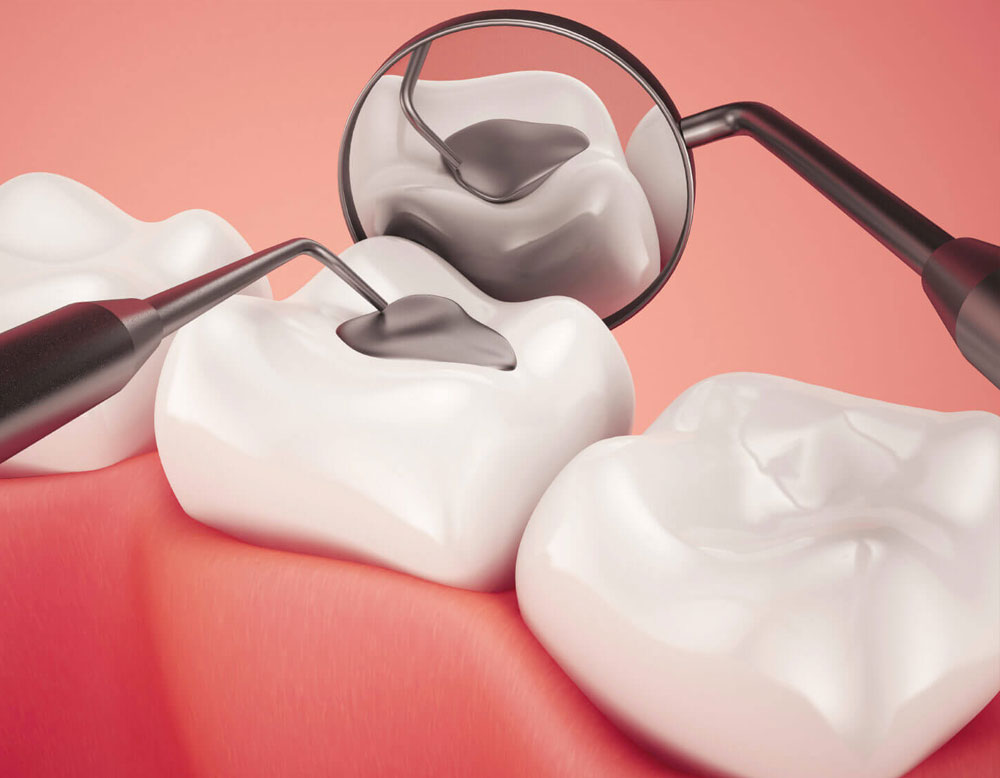
We often get questions about dental fillings. What are dental fillings, why are they needed, and what are the different types of fillings available? We will address these queries and more in this blog!
A dental filling is a substance used to fill a cavity in a tooth or repair damaged tooth tissue. This prevents further tooth decay and helps the tooth maintain its shape and function.
Why are dental fillings necessary?
Tooth decay is the most common reason why tooth cleaning and filling are needed. Tooth decay is caused by bacteria that convert sugars in the mouth into acid, which attacks the tooth enamel. If tooth decay is not treated in time, it can lead to more serious dental problems, such as infections and tooth loss.
What types of fillings are there?
There are different types of tooth fillings, and each has its own pros and cons. Most fillings are one of the following:
- Amalgam: These fillings were widely used in the past. They are made of a mixture of metals, including mercury, silver, tin and copper. They are durable and relatively inexpensive but have a dark color that most patients do not like. That is why virtually no more are laid.
- Composite: These white fillings are made of a combination of plastic and glass particles and can be colored to match your teeth. In our practice, we almost always use composite fillings.
- Compomer: this filling is mainly used for baby teeth because it wears out about as quickly as the baby teeth themselves. They are, therefore, somewhat less durable than composite.
- Ceramic: These fillings are made of porcelain and are custom-made in a dental lab. They have a very natural look and are durable, but they are also the most expensive option of the four.
If a large portion of the tooth has been damaged by tooth decay or fracture, a crown may be required as the recommended treatment.
How is a dental filling placed?
Placing a white tooth filling is generally a simple procedure. To close the hole, the dentist will first drill into the decayed tooth. The tooth is then cleaned and dried so that the filling adheres better. The filling is then applied and adapted to the shape of the tooth. Finally, the filling is cured using a special lamp and then polished.
Does placing fillings hurt?
Having a cavity filled in your tooth doesn’t have to be painful. However, it can be sensitive during drilling, depending on the depth of the hole and personal pain threshold. You can always ask for a local anesthetic. This makes the treatment completely painless.
After the treatment, you may experience sensitivity when drinking hot or cold drinks. You don’t need to worry about this as this is normal. If the pain persists for a long time or is intense, please contact your dental office.
What happens if I don’t have a cavity in my tooth filled?
If a cavity is not filled or filled too late, this can lead to further tooth decay. The hole can enlarge and penetrate deeper into the tooth, affecting the dental nerve and causing pain. In severe cases, the dental nerve can become inflamed, and root canal treatment may be required, or the tooth may even be lost. So have your cavities treated in time!
Prevention is better than cure.
When it comes to your teeth, the adage “prevention is better than cure” is undoubtedly true. In order to stop additional tooth decay, brushing and flossing on a regular basis can remove plaque. Additionally crucial are routine dental examinations and cleanings to identify any issues early.

 The Digital Solutions